The phrase classical Christian education is appearing more often in conversations among parents who are looking for something different from the standard educational model. But for many families, it is not entirely clear what the term actually means in practice. Is it a school that teaches the Bible? Is it a return to memorization and recitation? Is it only for academically gifted students?
Classical Christian education is a specific educational philosophy with deep historical roots, a coherent theory of human development, and a distinctive approach to curriculum that is gaining renewed attention precisely because the outcomes it produces are genuinely different from those of conventional education. Understanding what it is, how it organizes learning, what the classroom experience looks like, and what kind of students it produces helps families make a more informed decision about whether it is the right fit.
The Historical Roots of Classical Education
Classical education traces its origins to ancient Greece and Rome and was the dominant form of Western education for more than two thousand years. It was the educational framework of Augustine, Aquinas, Erasmus, and C.S. Lewis. It organized learning around what Renaissance educators called the Trivium, a sequence of three stages corresponding to the natural cognitive development of children.
What distinguished the classical approach from more narrowly vocational forms of education was its conviction that the purpose of education was not the transmission of specific practical skills but the development of the whole person: a mind capable of clear reasoning, a character capable of virtuous action, and a spirit capable of perceiving what is true, good, and beautiful. Christian educators integrated this classical framework with a Biblical worldview, producing a tradition of learning that saw all subjects as connected and all knowledge as ultimately illuminated by faith.
The Trivium: Three Stages of Human Learning
The Grammar Stage: Building the Foundation
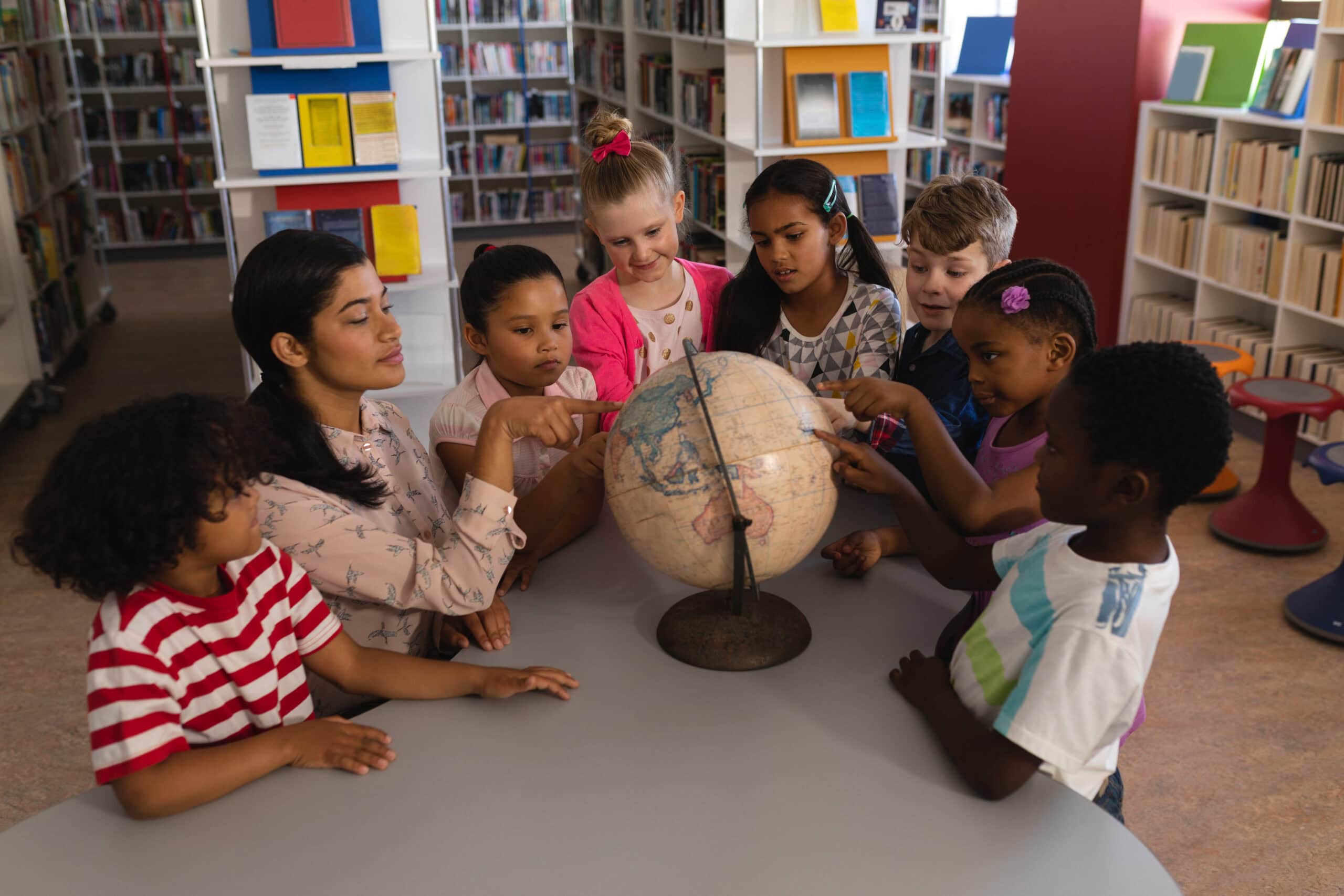
In the grammar stage, roughly corresponding to elementary school years, children are at the peak of their natural capacity to absorb and retain information. Classical schools deliberately use this window by teaching children the fundamentals of language, history, mathematics, and science through repetition, chant, song, and memorization. This is not memorization for its own sake. It is the systematic accumulation of the raw material that will fuel reasoning in later years.
A child who knows the grammar of a subject, the basic vocabulary, the key facts, the fundamental patterns, is equipped to think about that subject in depth later. A child who lacks this foundation has nothing to reason with. Classical schools treat the grammar stage as the critical foundation-laying phase of education, not as years to simply be gotten through on the way to more advanced learning.
The Logic Stage: Learning to Think
In the logic stage, roughly corresponding to middle school, children naturally begin to question, challenge, and look for connections and contradictions. Anyone who has raised a child through early adolescence recognizes this stage. The child who previously accepted what they were told now wants to know why, and is quick to point out inconsistencies. Classical education meets this developmental reality directly by teaching formal logic and by structuring learning around the analysis of texts, arguments, and ideas.
Students in the logic stage learn not just what but why. They develop the capacity to evaluate competing claims, identify logical fallacies, construct sound arguments, and distinguish between strong and weak evidence. These are skills that apply across every subject and every domain of life, and they are skills that most conventional educational models do not teach directly.
The Rhetoric Stage: Learning to Communicate
In the rhetoric stage, corresponding to high school, students bring together the knowledge acquired in the grammar stage and the analytical tools developed in the logic stage to learn how to communicate with clarity, beauty, and persuasive force. They read primary sources across history, literature, science, and philosophy. They write extensively and receive rigorous feedback. They engage in Socratic discussion and learn to present their thinking in a way that moves and persuades a thoughtful audience.
The goal of the rhetoric stage is not polish for its own sake. It is the ability to take what one knows and has reasoned through and communicate it effectively in service of genuine understanding. The student who completes this stage well can think clearly, write compellingly, speak confidently, and engage seriously with ideas that matter.
The Christian Foundation
What distinguishes classical Christian education from classical education alone is the integration of a Biblical worldview throughout the curriculum. This integration is not a layer added on top of secular academic content. It flows from the conviction that all knowledge is interconnected, that truth is unified, and that genuine education cannot separate the pursuit of knowledge from the source of all knowledge.
In practice, this means that history is studied as the unfolding of events in a world that God created and governs. Literature is read with an understanding that it reflects the image of God in fallen human beings, their capacity for beauty and their capacity for evil. Mathematics is understood as reflecting the rational structure of a created reality. Science is the disciplined observation of a world made by an orderly God. Faith is not a separate subject that interrupts the academic program. It is the lens through which all subjects are understood.
What This Produces
Students who receive a classical Christian education do not just know more facts than their conventionally educated peers. They are more capable readers, more rigorous thinkers, more effective communicators, and more formed in character than students who have been trained primarily to perform on standardized assessments. They are prepared not just for college but for a life in which they will be called upon to reason well, communicate clearly, and make decisions grounded in a coherent understanding of what is true and good.
The outcomes are predictable because the method is coherent. Classical Christian education works because it is matched to how human beings actually develop, what they are capable of at each stage, and what they need to become fully formed persons rather than merely credentialed ones.
What This Looks Like at Carden Memorial School
Carden Memorial School has provided a classical, faith-based education in Salt Lake City for over 50 years. Our non-denominational Christian curriculum emphasizes strong foundational skills in reading, writing, and arithmetic in the early years, enriched by Latin, history, and classic literature, alongside weekly Biblical devotionals and a community culture built on dignity, mutual respect, and care for the whole person.
The Carden difference is something families notice when they visit. The students carry themselves with a quiet confidence that comes from genuinely knowing things and having been taught to think about what they know. The relationships between teachers and students reflect the conviction that education is fundamentally a human endeavor, not a data transfer process. And the community around the school reflects the values that the curriculum is designed to cultivate.
We invite you to schedule a tour and see classical Christian education in action. Visit cardenmemorial.com to connect with our admissions team.